Understanding Diabetic Neuropathy
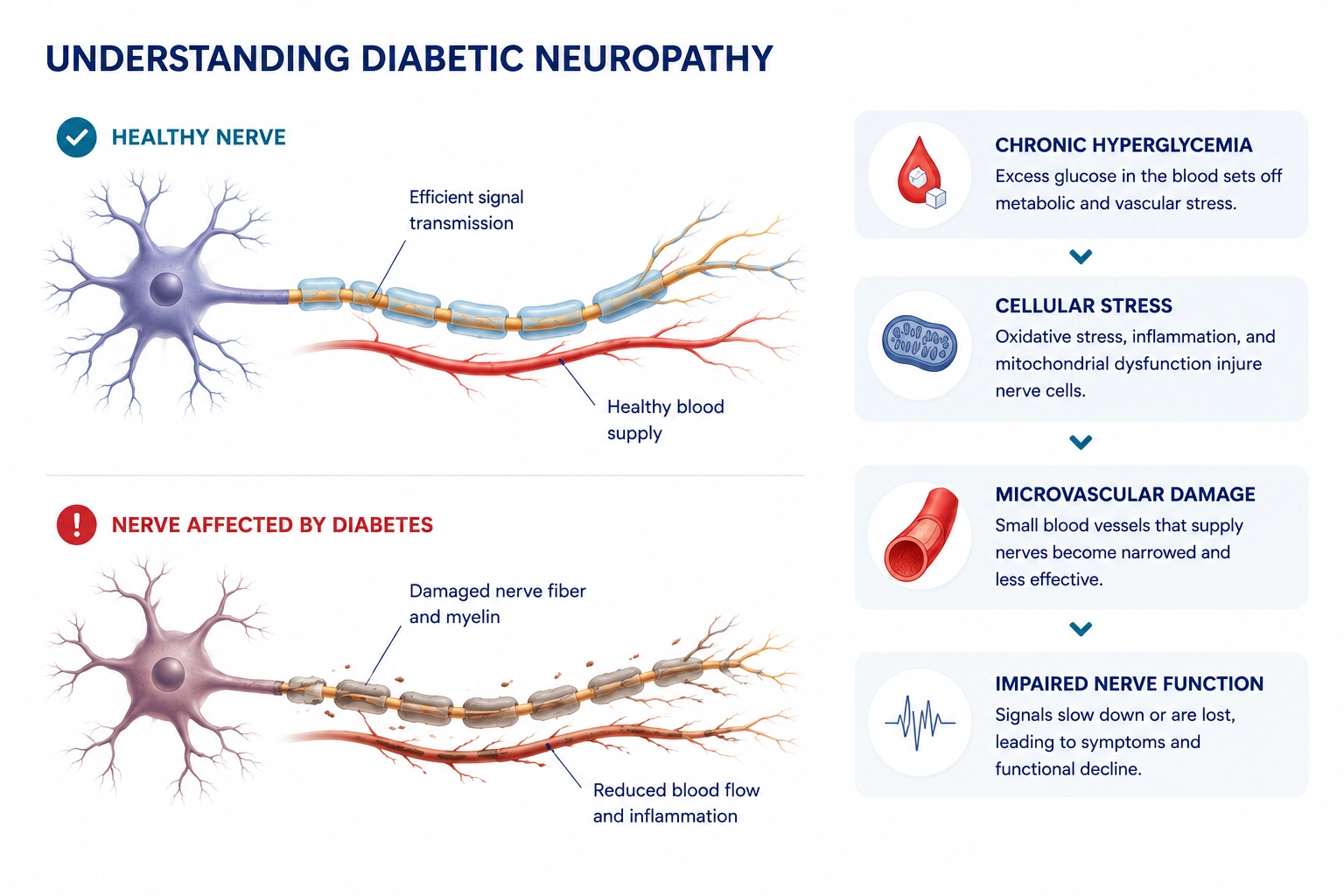
Peripheral nerves carry sensory information from the body to the brain while also controlling muscle movement and many automatic bodily functions. Healthy nerves depend on an adequate blood supply and a stable metabolic environment to function properly.
In diabetes, prolonged elevations in blood glucose trigger complex metabolic and vascular changes that damage nerve fibers and the small blood vessels that supply them. Reduced blood flow, oxidative stress, inflammation, and impaired cellular repair contribute to progressive nerve dysfunction.
As damage accumulates, electrical signals become weaker or are lost entirely, leading to sensory deficits, chronic pain, muscle weakness, and impaired balance.
What Happens in Diabetic Neuropathy
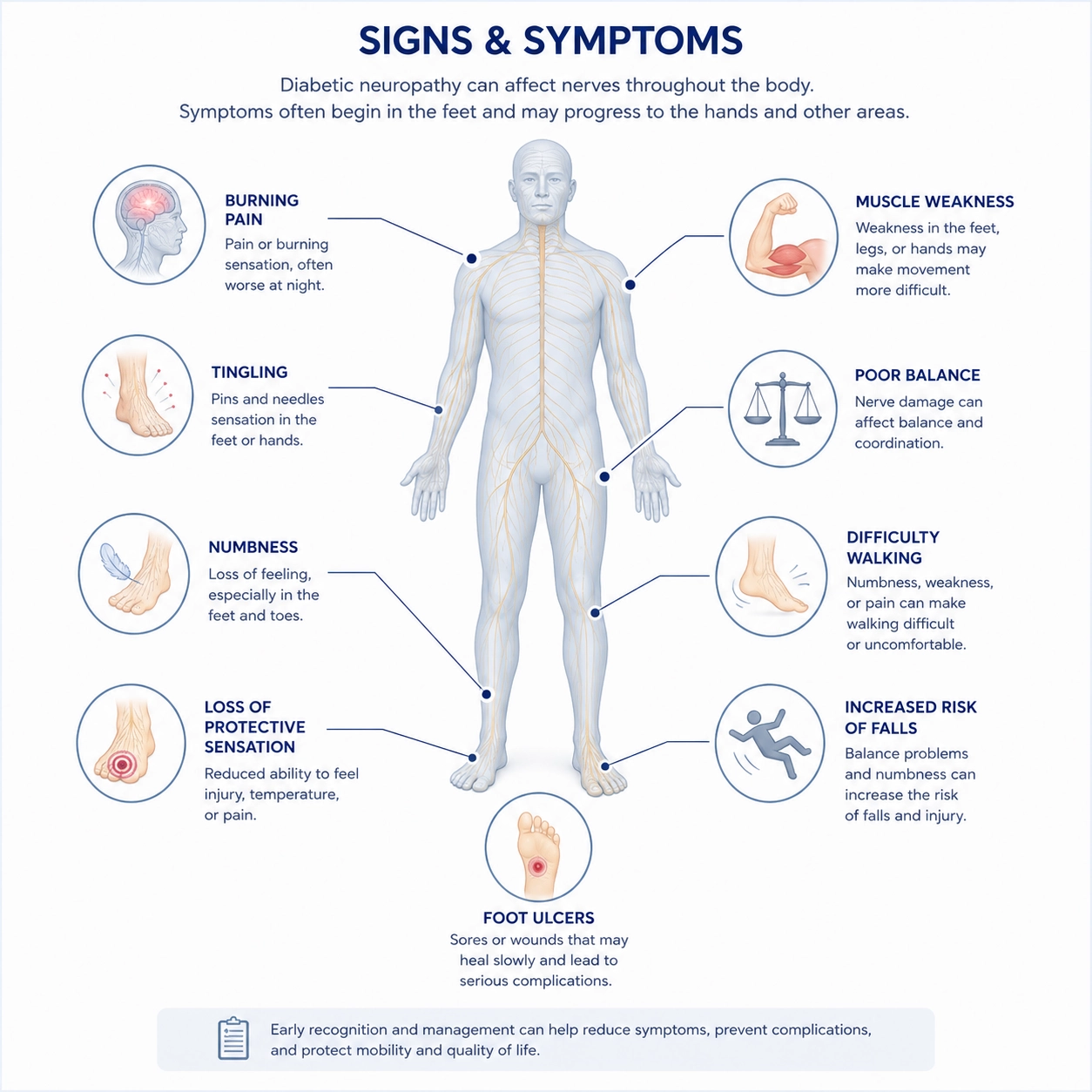
Diabetic neuropathy most often begins in the longest nerves supplying the feet, where symptoms may initially be subtle. Individuals commonly notice numbness, tingling, burning sensations, or reduced ability to feel temperature or pain.
As nerve damage progresses, sensory loss may increase while muscles controlling the feet and ankles become weaker. Reduced sensation combined with muscle weakness increases the risk of falls, foot injuries, ulcers, and infections that may go unnoticed because protective sensation has been lost.
Without appropriate management, complications can substantially impair mobility and daily functioning.
Disease Progression
Diabetic neuropathy typically develops gradually over many years and often parallels the duration and control of diabetes.
Early stages may involve occasional tingling or numbness in the toes. Over time, symptoms often spread upward in a characteristic “stocking” distribution. As nerve damage becomes more extensive, balance problems, muscle weakness, chronic pain, and loss of protective sensation become increasingly common.
Advanced disease may significantly affect mobility and increase the risk of serious foot complications.
Clinical Assessment & Monitoring
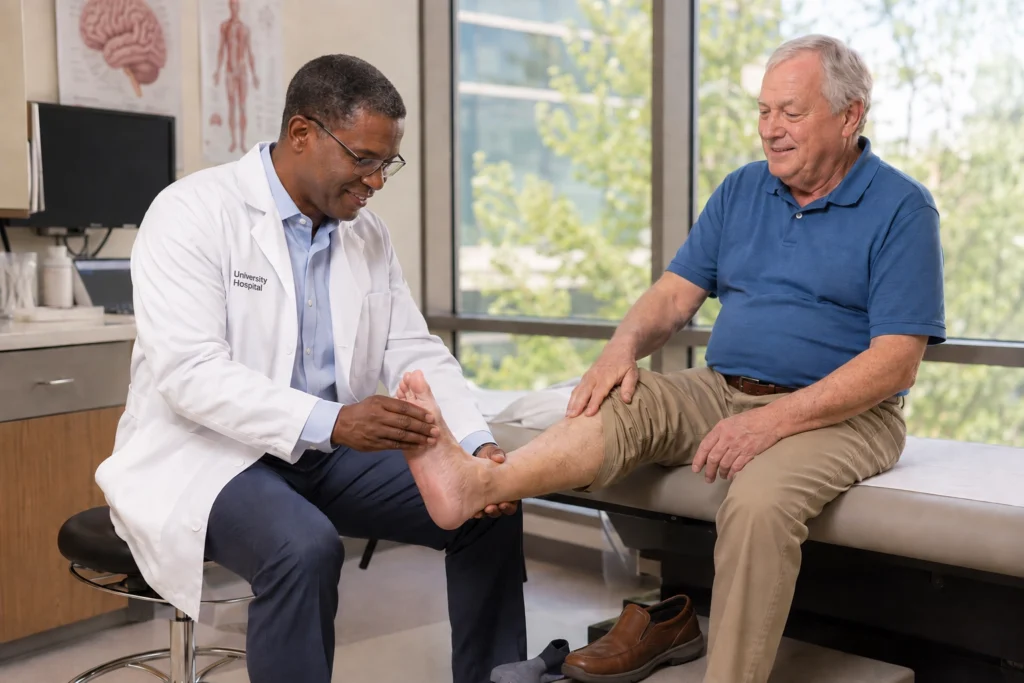
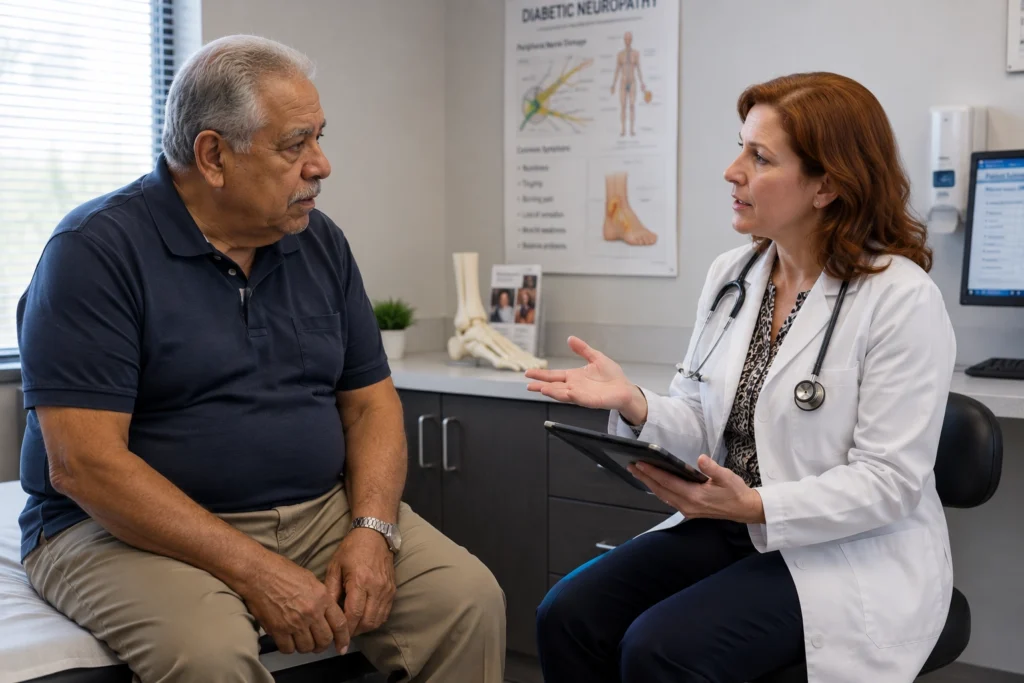
Diagnosis of diabetic neuropathy begins with a comprehensive neurological examination and assessment of diabetes history.
Healthcare providers evaluate sensation, muscle strength, tendon reflexes, balance, and foot health using standardized neurological examinations. Additional testing may include nerve conduction studies, quantitative sensory testing, vibration perception, and laboratory evaluation to exclude other causes of neuropathy.
Regular foot examinations and ongoing neurological assessments are essential for monitoring disease progression and reducing the risk of complications.
Multiple biological processes contribute to diabetic neuropathy.
Chronic hyperglycemia promotes oxidative stress, inflammation, mitochondrial dysfunction, impaired blood flow, and accumulation of advanced glycation end products (AGEs). Together, these changes injure peripheral nerves and reduce their ability to repair themselves.
As damage continues, both nerve fibers and supporting cells become progressively dysfunctional, leading to impaired nerve signaling and gradual loss of sensory and motor function.
Signs & Symptoms
Common symptoms include:
- Numbness
- Tingling
- Burning pain
- Sharp or shooting pain
- Loss of protective sensation
- Muscle weakness
- Poor balance
- Difficulty walking
- Foot ulcers
- Increased risk of falls
Symptoms usually begin in the feet before progressing upward and may eventually involve the hands.
Risk Factors
The likelihood of developing diabetic neuropathy increases with:
- Longer duration of diabetes
- Poor blood glucose control
- Obesity
- High blood pressure
- High cholesterol
- Smoking
- Kidney disease
- Increasing age
Careful diabetes management and routine foot care may help reduce the risk of progression and complications.
Current Treatment Approaches
There are currently no approved therapies that reverse established diabetic peripheral nerve damage.
Current treatment focuses on improving blood glucose control, relieving neuropathic pain, protecting the feet, and preserving mobility through supportive care. Management may include glucose-lowering medications, pain medications, physical therapy, orthotic devices, routine foot care, and lifestyle modifications.
- Improve walking safety and balance
- Protect insensate feet
- Customized to individual needs

- Stretching and strengthening exercises
- Balance and gait training
- Energy conservation techniques
- Support for daily living activities

- Neuropathic pain management
- Glucose-lowering medications
- Management of fatigue and sleep issues
- Treatment of anxiety or depression

- Blood glucose control
- Regular low-impact exercise
- Routine foot care and inspection
- Support groups and counseling

- Neurologist- and diabetes-led care
- Regular assessments of sensation and strength
- Monitoring for foot complications
- Coordination of supportive services
Although these interventions can improve symptoms and reduce complications, they do not restore damaged peripheral nerves. As a result, there remains a significant unmet need for therapies that address the underlying biology of diabetic neuropathy.
Why a Cell-Therapy Approach?
Restoring peripheral nerve health represents an important therapeutic goal for individuals living with diabetic neuropathy.
Liferna is developing an investigational regenerative medicine approach designed to support peripheral nerve repair and functional recovery. By addressing biological processes involved in nerve injury and regeneration, our goal is to help preserve sensation, mobility, and independence while addressing the underlying disease rather than only managing symptoms.
LFR-1501 is an investigational regenerative cell therapy being developed to support repair of damaged peripheral nerves in individuals living with diabetic neuropathy.
Unlike treatments that primarily relieve symptoms, regenerative approaches seek to restore biological function by supporting a healthier nerve microenvironment, promoting repair processes, and helping improve nerve function over time.
Liferna is evaluating investigational regenerative medicine approaches intended to address the underlying biology of diabetic neuropathy and support the development of potential disease-modifying therapies. As part of its broader neuromuscular strategy, Liferna is exploring therapeutic approaches designed to support peripheral nerve repair and functional recovery with the goal of preserving sensation, maintaining mobility, and addressing significant unmet medical need.