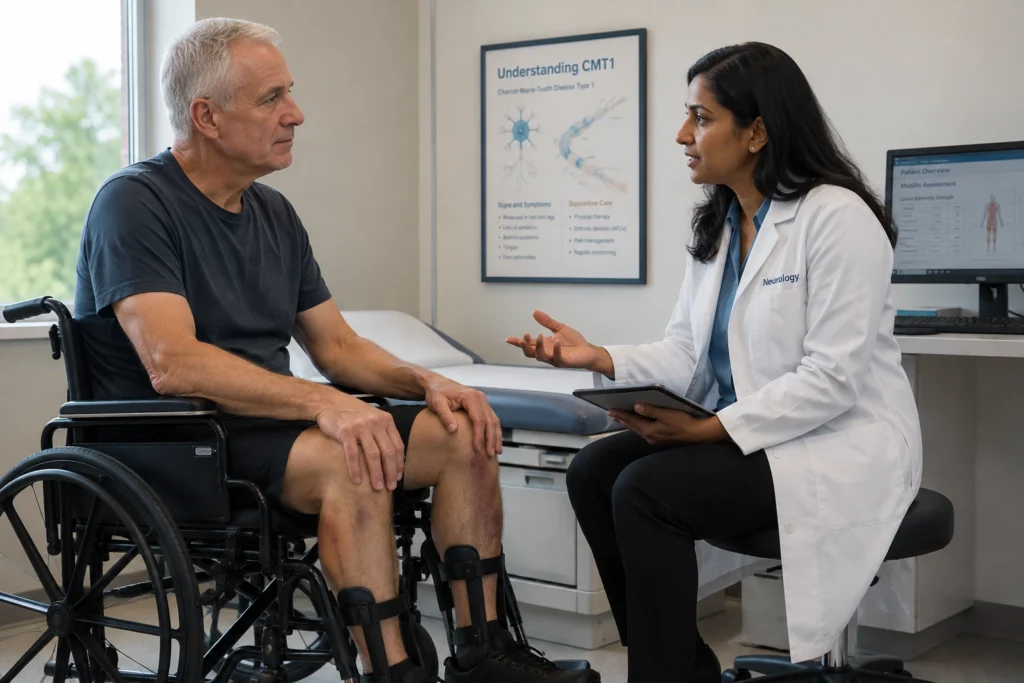

Understanding CMT1
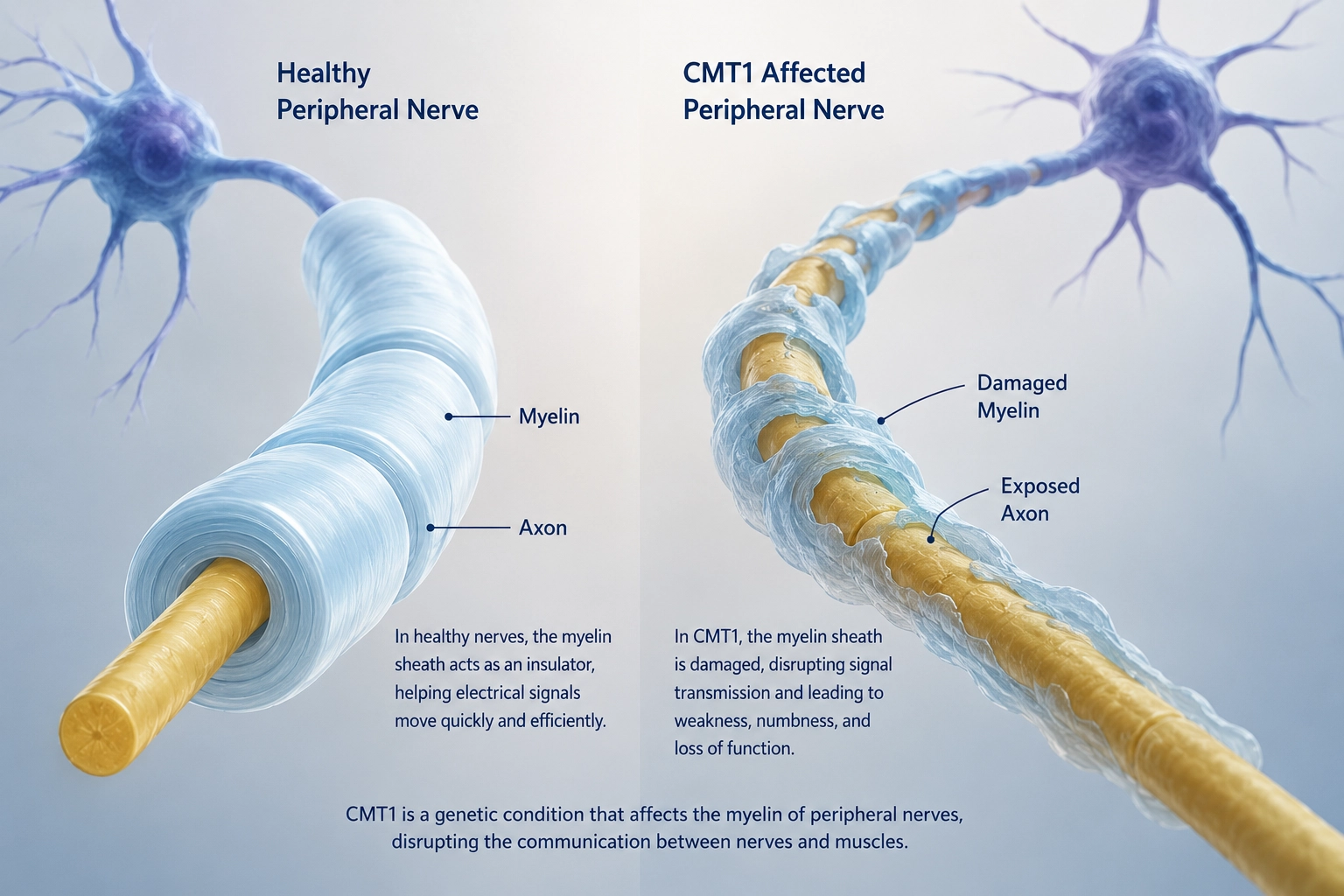
Peripheral nerves act as communication highways that transmit electrical signals between the brain, spinal cord, muscles, and sensory receptors. In CMT1, mutations affecting proteins involved in myelin production—most commonly duplication of the PMP22 gene—cause Schwann cells to produce unstable or excessive myelin.
Over time, repeated cycles of demyelination and remyelination impair nerve conduction. As electrical signals become slower and less efficient, muscles receive weaker activation while sensory information from the hands and feet becomes diminished.
Eventually, prolonged nerve dysfunction can lead to secondary axonal degeneration, making functional recovery increasingly difficult.
What Happens During the Disease
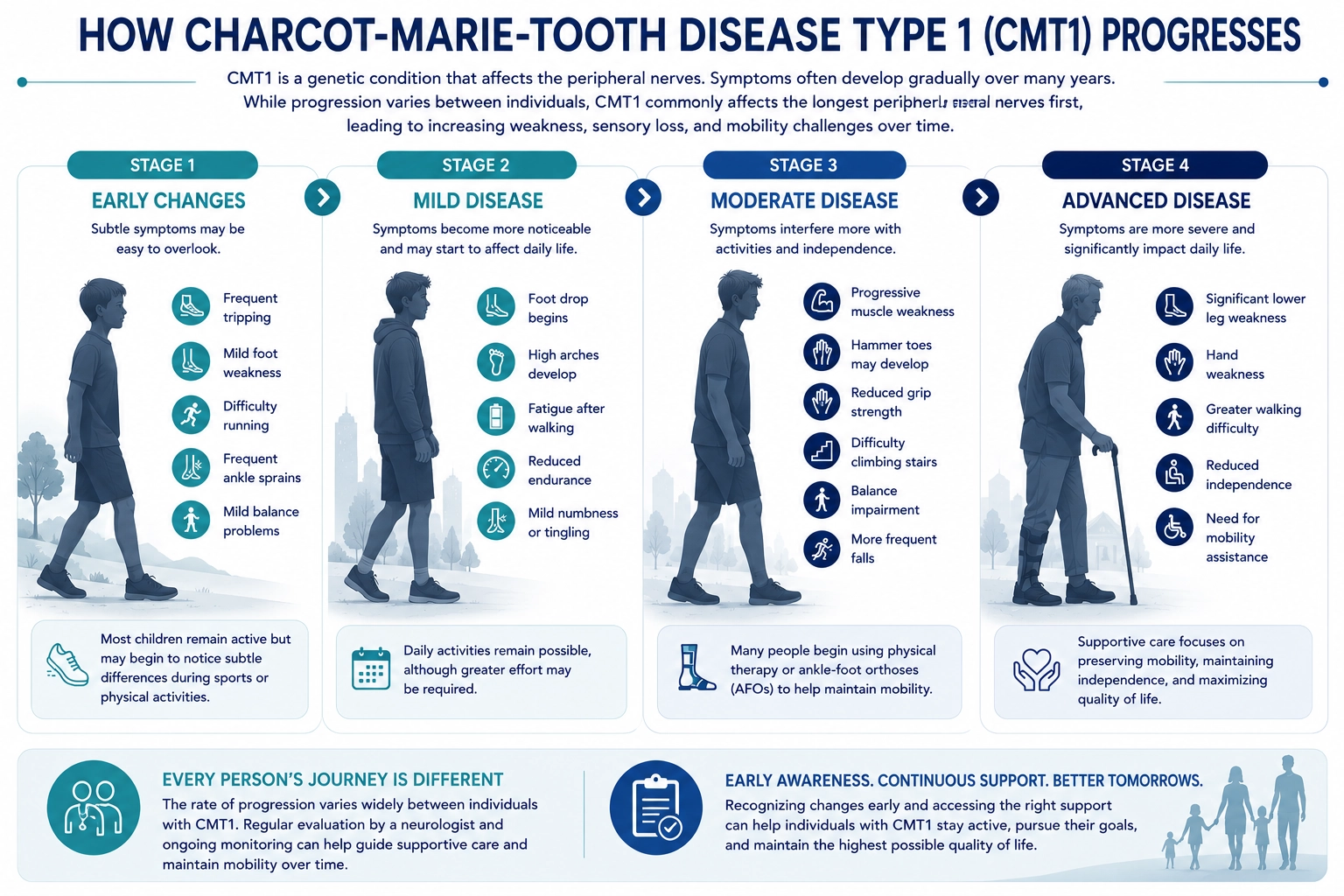
The earliest changes typically occur in the longest peripheral nerves that supply the feet and lower legs. Patients often first notice frequent ankle sprains, difficulty running, or tripping over uneven surfaces.
As nerve dysfunction progresses, weakness gradually extends into the lower legs, hands, and forearms. Muscles that no longer receive adequate nerve stimulation begin to shrink, resulting in characteristic foot deformities, reduced grip strength, and impaired balance.
Because sensory nerves are also affected, many individuals experience numbness, reduced vibration sensation, and decreased awareness of foot position, further contributing to falls and mobility limitations.
Disease Progression
Although progression varies between individuals, CMT1 generally develops slowly over decades.
Early stages are characterized by mild weakness and subtle gait abnormalities. As the disease advances, muscle wasting, foot deformities, and sensory impairment become more pronounced. Many patients eventually require ankle-foot orthoses (AFOs), walking aids, or orthopedic surgery to maintain mobility.
Despite its gradual course, the cumulative impact of CMT1 can substantially affect independence, employment, physical activity, and overall quality of life.
Clinical Assessment & Monitoring
Diagnosis of CMT1 combines clinical examination with electrophysiological testing and genetic confirmation.
Neurologists assess muscle strength, tendon reflexes, sensation, balance, gait, and foot structure. Nerve conduction studies are particularly important because they demonstrate the markedly slowed conduction velocities characteristic of demyelinating neuropathies.
Genetic testing can confirm the underlying mutation, helping establish the specific CMT subtype and guide family counseling.
Disease progression is commonly monitored using standardized clinical scales such as the Charcot-Marie-Tooth Neuropathy Score Version 2 (CMTNSv2), functional mobility assessments, and patient-reported outcomes.
CMT1 results from inherited genetic mutations that disrupt normal Schwann cell function and myelin maintenance.
The most common cause, PMP22 gene duplication, leads to abnormal production of peripheral myelin protein 22, impairing formation and stability of the myelin sheath. Other genes involved in myelin structure and Schwann cell biology may also contribute to related forms of CMT.
Loss of healthy myelin slows nerve conduction and increases metabolic stress on nerve fibers, eventually contributing to axonal degeneration and progressive functional decline.
Signs & Symptoms
Common symptoms include:
- Foot drop
- High arches (pes cavus)
- Hammer toes
- Distal muscle weakness
- Difficulty walking
- Frequent ankle sprains
- Balance impairment
- Hand weakness
- Reduced grip strength
- Numbness
- Tingling
- Reduced vibration sensation
Symptoms typically begin during childhood or adolescence but may vary considerably between individuals.
Risk Factors
CMT1 is an inherited genetic disorder and is not caused by lifestyle or environmental factors.
Individuals with a family history of CMT1 have an increased likelihood of inheriting the disease. Because the condition follows an autosomal dominant inheritance pattern in most cases, each child of an affected parent has a 50% chance of inheriting the mutation.
Genetic counseling can help families understand inheritance patterns and available testing options.
Current Treatment Approaches
There are currently no approved disease-modifying therapies for CMT1.
Management focuses on preserving mobility, maximizing independence, and addressing complications through supportive care. Treatment may include physical therapy, occupational therapy, ankle-foot orthoses, orthopedic surgery, pain management, and adaptive devices.

- Improve walking safety and balance
- Reduce foot drop
- Customized to individual needs

- Stretching and strengthening exercises
- Balance and gait training
- Energy conservation techniques
- Support for daily living activities

- Pain management
- Medications for neuropathic pain
- Management of fatigue and sleep issues
- Treatment of anxiety or depression

- Regular low-impact exercise
- Proper nutrition and hydration
- Fall prevention strategies
- Support groups and counseling

- Neurologist-led care
- Regular assessments of mobility and strength
- Monitoring for complications
- Coordination of supportive services
While these interventions can improve function and quality of life, they do not address the underlying biological mechanisms responsible for disease progression. There remains a significant unmet need for therapies that target the root causes of peripheral nerve dysfunction.
Why a Cell-Therapy Approach?
Preserving peripheral nerve function before irreversible nerve loss occurs represents an important therapeutic strategy for CMT1.
Liferna is developing an investigational regenerative medicine approach designed to support peripheral nerve repair and functional recovery. By targeting biological processes involved in nerve regeneration, our goal is to help maintain mobility and independence while addressing the underlying disease rather than only managing symptoms.
LFR-1501 is an investigational regenerative cell therapy being developed to support repair of damaged peripheral nerves in individuals living with CMT1.
Unlike supportive treatments that primarily address symptoms, regenerative approaches seek to restore biological function by promoting a healthier microenvironment that may support nerve repair, reduce ongoing degeneration, and improve functional outcomes. Through these mechanisms, regenerative therapies have the potential to help preserve mobility and independence over time.
Liferna is evaluating investigational regenerative medicine approaches intended to address the underlying biology of Charcot-Marie-Tooth disease type 1 (CMT1) and support the development of potential disease-modifying therapies. As part of its broader neuromuscular strategy, Liferna is exploring therapeutic approaches designed to support peripheral nerve repair and functional recovery with the goal of preserving mobility, maintaining independence, and addressing significant unmet medical need.