
Regenerative Cell Therapy for Musculoskeletal Diseases
LFR-1502 is an investigational allogeneic Musculoskeletal Stem Cell (MSSC) therapy being developed as a regenerative approach for musculoskeletal disease, with an initial focus on osteoarthritis (OA).
Musculoskeletal diseases can affect cartilage, bones, muscle, tendons, ligaments, and other connective tissues that work together to support movement and physical function. Although these conditions arise from different causes and affect different tissues, many share a common challenge: once musculoskeletal tissue is damaged or degenerates, its capacity for effective repair may be limited.
LFR-1502 is being developed as a regenerative medicine strategy designed to harness specialized cells to support tissue repair and restoration of function. The program is initially focused on OA, with the broader potential of multipotent stem cell technology providing opportunities for future applications across musculoskeletal diseases.
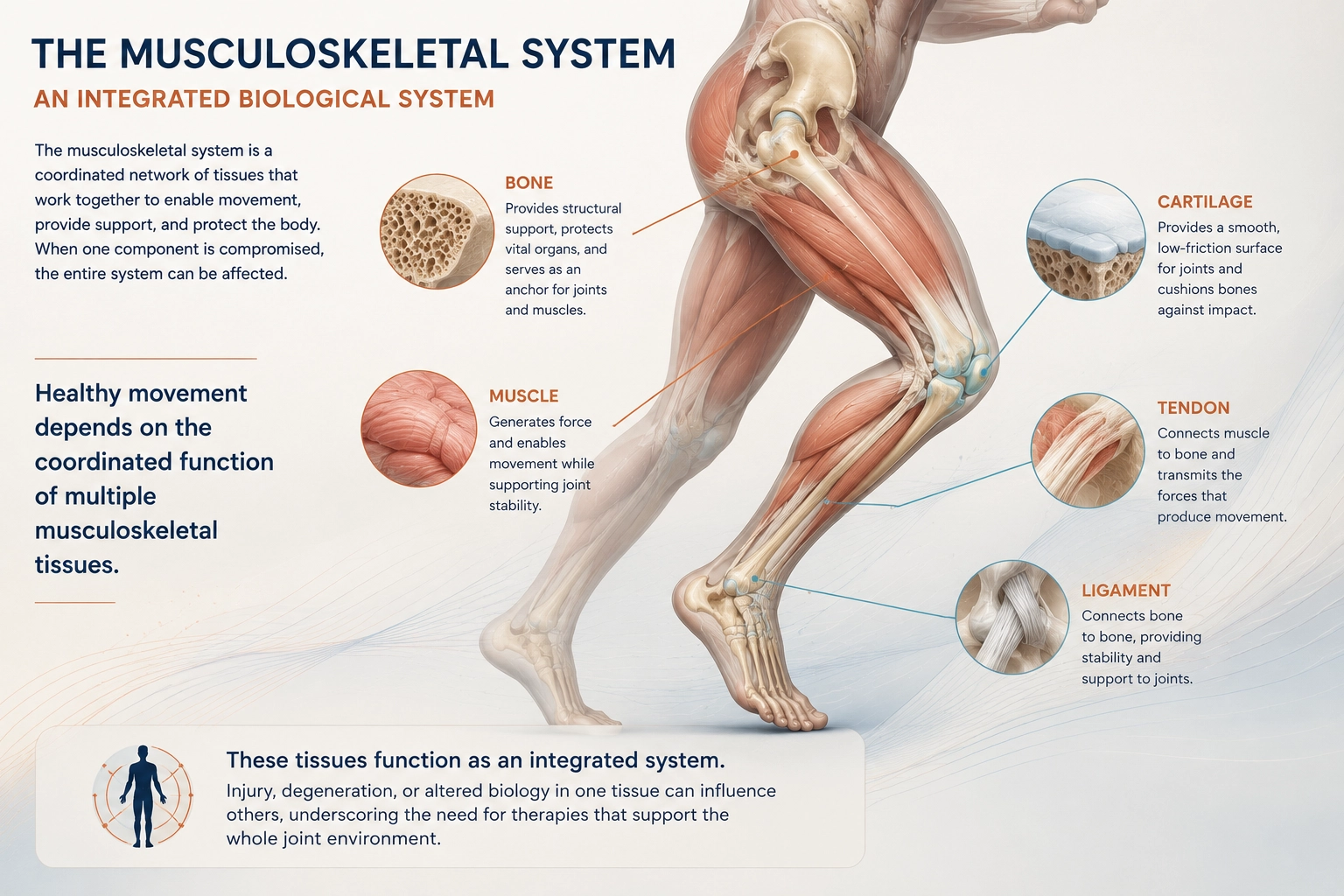
The musculoskeletal system is a highly integrated network of tissues that provides structural support, enables movement, distributes mechanical forces, and protects the body during everyday activity.
Bone provides structural strength. Muscle generates movement. Cartilage creates smooth, low-friction surfaces within joints. Tendons transmit forces from muscle to bone, while ligaments provide joint stability.
These tissues do not function independently. Healthy movement depends on their coordinated interaction and on the biological environment that maintains tissue integrity and supports repair.
When one component becomes damaged or dysfunctional, the effects can extend beyond an individual tissue, altering mechanical forces and biological signaling throughout the surrounding musculoskeletal environment.
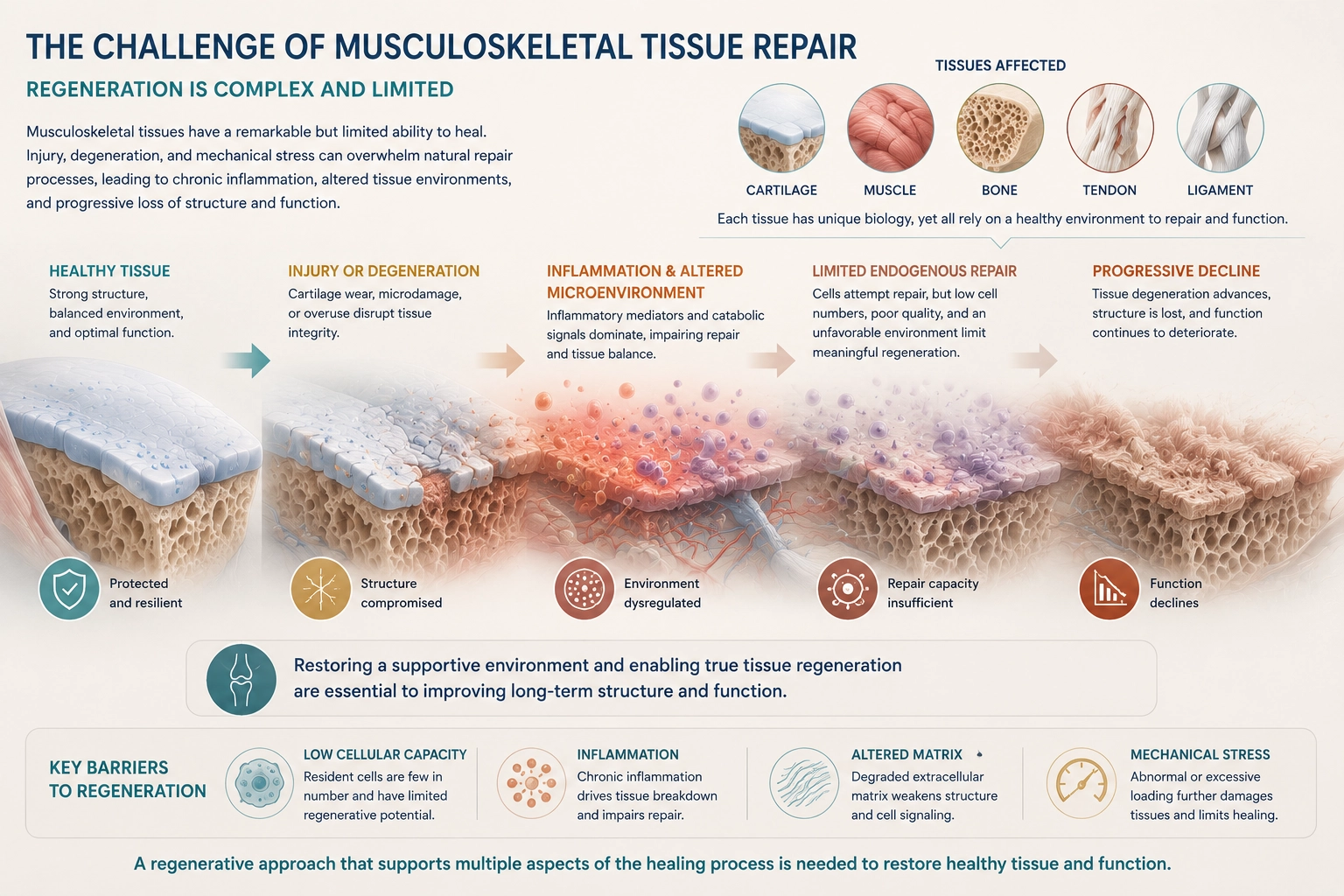
Musculoskeletal tissues are continually exposed to mechanical loading, repetitive stress, injury, aging, and other biological challenges. While some tissues can respond effectively to minor injury, others have limited intrinsic regenerative capacity.
Following injury or degeneration, changes in the local tissue environment—including inflammation, extracellular matrix disruption, altered cellular activity, and abnormal mechanical stress—can interfere with effective repair.
When the balance between tissue damage and regeneration is disrupted, progressive structural deterioration may occur, ultimately affecting mobility and physical function.
Regenerative medicine seeks to address this challenge by developing approaches that may support tissue repair, promote a healthier local environment, and help preserve or restore musculoskeletal function.
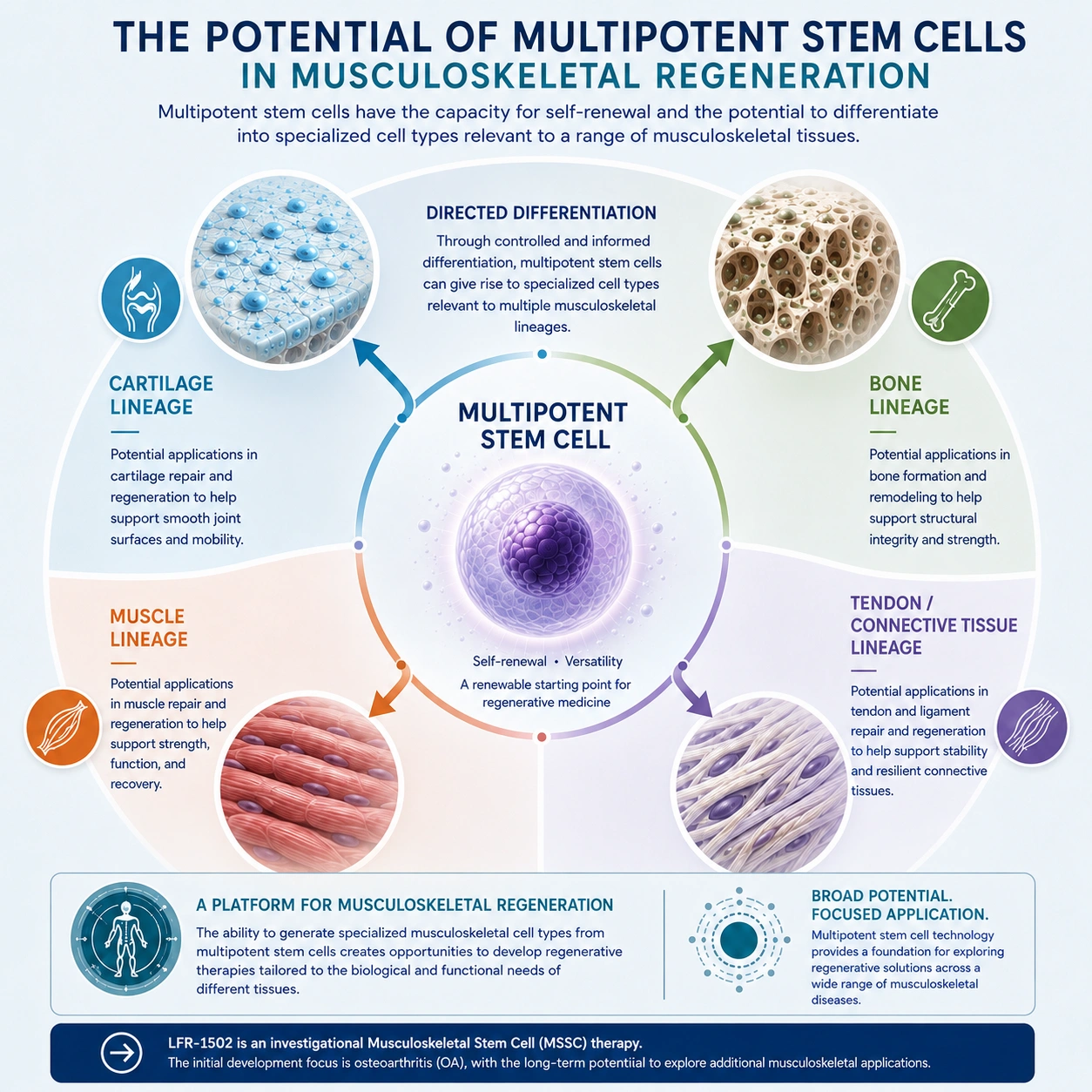
Multipotent stem cells provide a versatile starting point for regenerative medicine because of their capacity for self-renewal and their potential to differentiate into specialized cell types.
Through controlled differentiation, multipotent stem cells have the potential to generate specialized cell populations with characteristics relevant to a range of musculoskeletal tissues, creating opportunities to explore regenerative approaches tailored to different biological and structural needs.
Potential applications may span multiple musculoskeletal lineages, including cell types relevant to:
Cartilage | Bone | Muscle | Tendon and Connective Tissue
This versatility provides a foundation for exploring regenerative cell therapies across a broad range of musculoskeletal diseases.
The initial development focus for LFR-1502 is OA, the most common form of arthritis and a chronic, progressive disease characterized by deterioration of articular cartilage, changes in underlying bone, and inflammation within the joint.
Healthy articular cartilage provides a smooth, low-friction surface that allows bones to move freely while helping distribute mechanical loads across the joint. Because cartilage has limited capacity for self-repair, progressive damage can accumulate over time.
As cartilage deteriorates and the joint environment changes, movement can become increasingly painful and restricted, contributing to stiffness, reduced mobility, and diminished quality of life.
Currently available treatments can help manage symptoms, but generally do not restore damaged cartilage or reverse the underlying structural progression of OA.
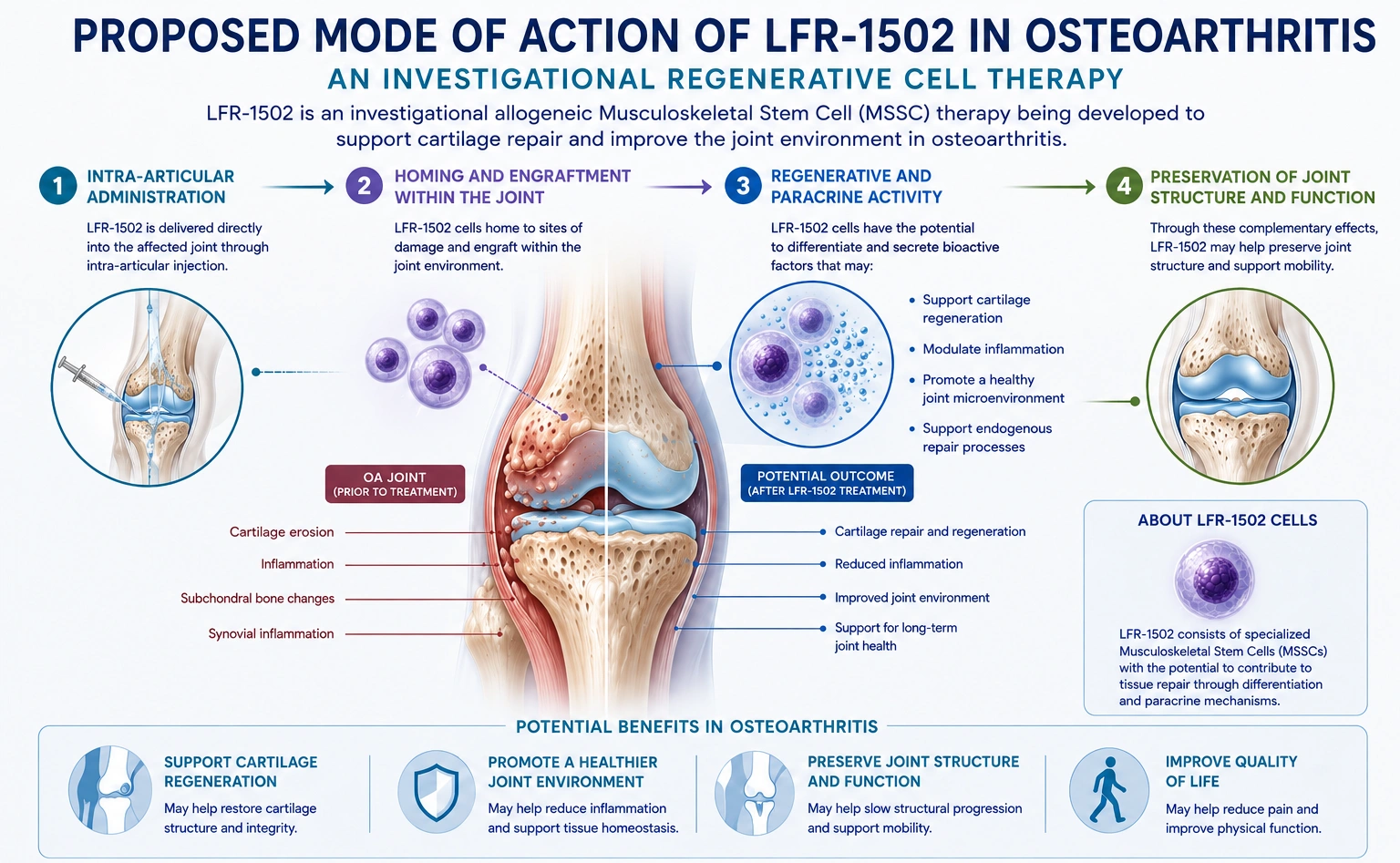
LFR-1502 is an investigational allogeneic MSSC regenerative cell therapy being developed to support cartilage repair and restoration of joint function in OA.
Following intra-articular administration, LFR-1502 is designed to deliver MSSCs directly into the affected joint.
In preclinical studies, LFR-1502 is being evaluated for its potential to support cartilage regeneration, promote a healthier joint microenvironment, and help preserve joint structure and function.
Together, these regenerative activities may provide a new approach to addressing the underlying structural and biological changes associated with OA rather than focusing solely on symptom management.
As an investigational therapy, the proposed biological mechanisms and potential clinical benefits of LFR-1502 continue to be evaluated through ongoing preclinical research.
Musculoskeletal diseases encompass a diverse group of conditions affecting the tissues responsible for movement, structural support, and physical function.
LFR-1502 is initially being developed for OA, with the broader regenerative potential of multipotent stem cell technology providing opportunities to explore additional musculoskeletal applications in the future.
Explore the disease page below to learn more about its underlying biology, clinical manifestations, current treatment landscape, and unmet medical need.
Learn more about OA, including its disease biology, signs and symptoms, diagnosis, current treatment options, and the unmet need for therapies capable of addressing progressive joint degeneration.