

Understanding Osteoarthritis
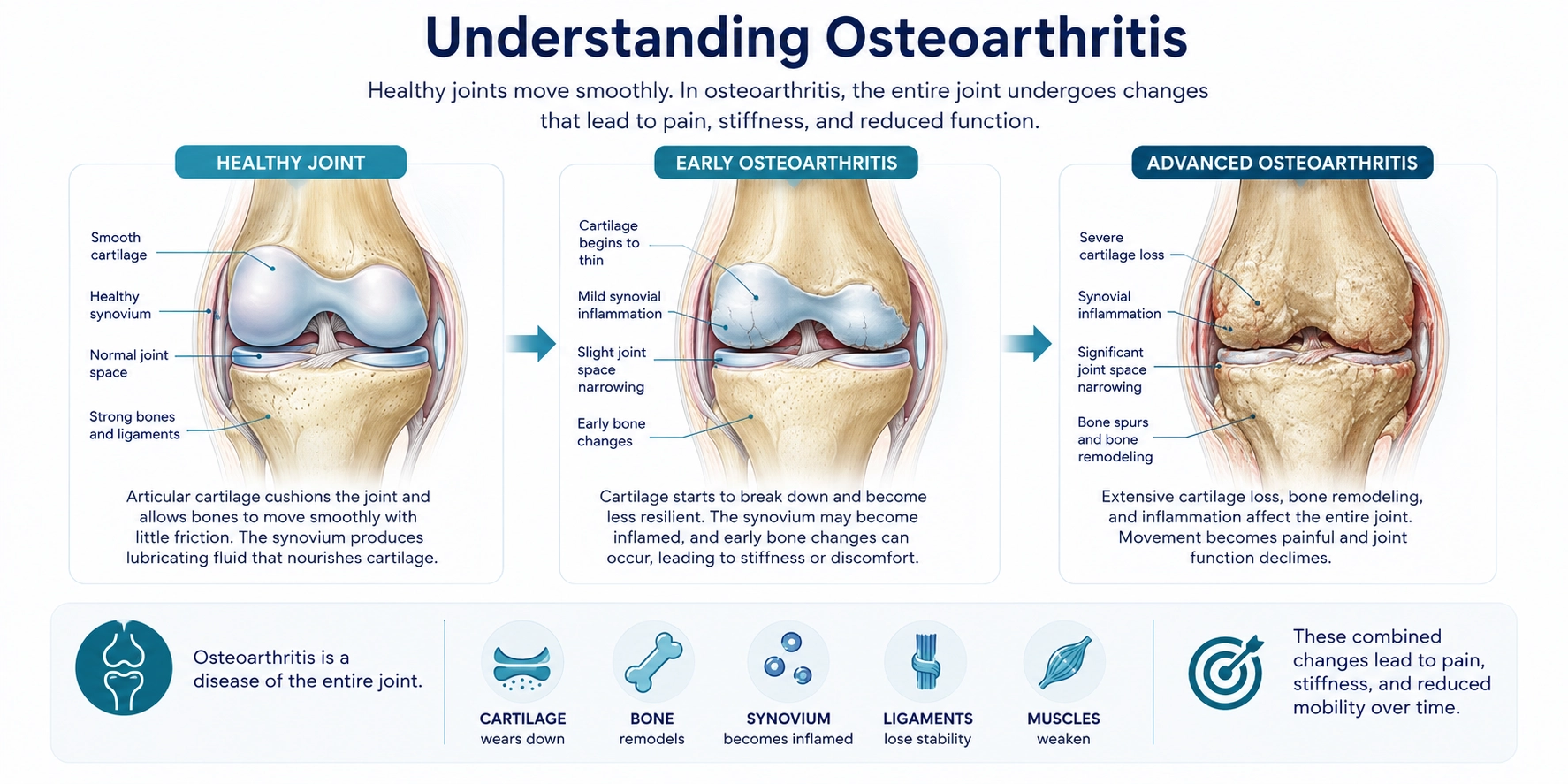
Healthy joints allow bones to move smoothly because their surfaces are covered with articular cartilage and lubricated by synovial fluid. Cartilage distributes forces across the joint while cushioning movement and minimizing friction.
In osteoarthritis, biological changes disrupt the normal balance between cartilage maintenance and breakdown. Over time, cartilage becomes thinner and less resilient while inflammation, changes in the underlying bone, and alterations in surrounding tissues contribute to progressive joint degeneration.
As these structural changes accumulate, movement becomes increasingly painful and joint function gradually declines.
What Happens During the Disease
Osteoarthritis develops gradually over many years.
Early changes often occur within the cartilage and supporting tissues before symptoms become obvious. As cartilage deteriorates, the underlying bone experiences greater mechanical stress, while inflammation within the joint contributes to pain, stiffness, and swelling.
Eventually, multiple joint tissues—including cartilage, bone, synovium, ligaments, and surrounding muscles—become involved, reducing stability, flexibility, and overall function.
Clinical Assessment & Monitoring
Diagnosis of osteoarthritis combines clinical evaluation with imaging and functional assessment.
Healthcare providers evaluate joint pain, stiffness, range of motion, strength, gait, and overall physical function. X-rays remain the most commonly used imaging modality to assess joint space narrowing, osteophytes, and changes in underlying bone, while MRI may provide additional information about cartilage and soft tissues in selected patients.
Patient-reported outcomes and functional mobility assessments help monitor disease progression and treatment response over time.
Osteoarthritis is driven by complex biological and mechanical processes involving the entire joint.
Mechanical stress, aging, inflammation, altered cellular signaling, and changes in the extracellular matrix contribute to progressive cartilage degeneration. Chondrocytes, synovial cells, subchondral bone, and inflammatory mediators interact to promote tissue remodeling and loss of joint integrity.
These interconnected biological pathways contribute to progressive pain, stiffness, and declining function.
Signs & Symptoms
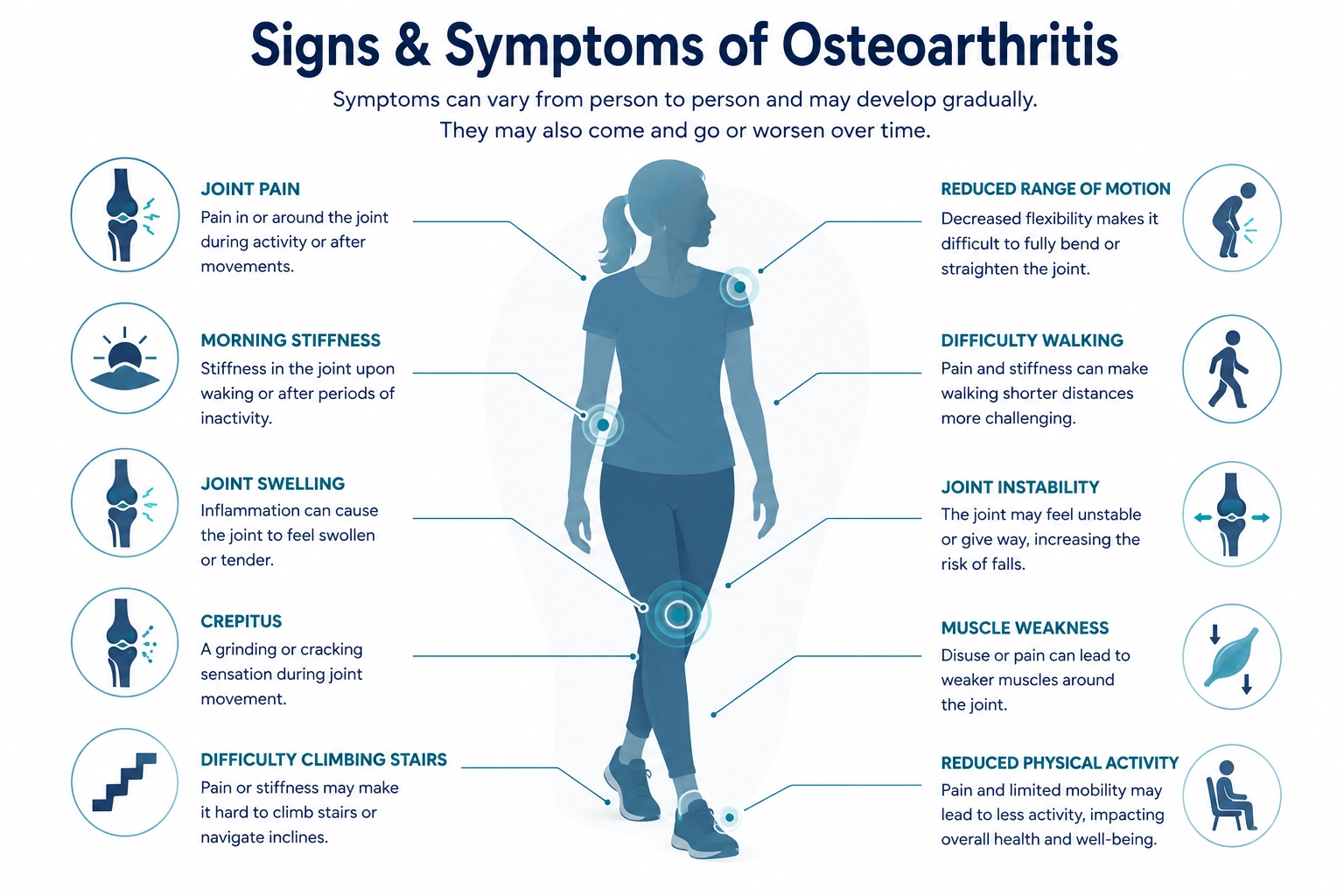
Common symptoms include:
- Joint pain
- Morning stiffness
- Pain with activity
- Reduced range of motion
- Joint swelling
- Crepitus (grinding sensation)
- Joint instability
- Muscle weakness
- Difficulty walking
- Difficulty climbing stairs
- Reduced physical activity
Symptoms often develop gradually and may fluctuate over time.
Risk Factors
The likelihood of developing osteoarthritis increases with:
- Increasing age
- Previous joint injury
- Obesity
- Repetitive joint loading
- Family history
- Muscle weakness
- Joint malalignment
- Certain metabolic conditions
Maintaining a healthy weight, remaining physically active, and protecting joint health may help reduce the risk of progression.
Current Treatment Approaches
Treatment is not one-size-fits-all. A combination of approaches can help manage symptoms, improve function, and enhance quality of life.








Although these interventions can improve symptoms and quality of life, they do not restore healthy joint tissue or reverse the underlying degenerative process. Consequently, there remains a significant unmet need for therapies that address the biology of osteoarthritis and support long-term joint preservation.
Why a Cell-Therapy Approach?
Supporting the repair and regeneration of damaged joint tissues represents an important therapeutic goal for individuals living with osteoarthritis.
Liferna is developing an investigational regenerative medicine approach designed to support restoration of the joint microenvironment and promote functional recovery. By targeting biological processes involved in tissue repair, our goal is to help preserve mobility, reduce pain, and address the underlying disease rather than only managing symptoms.
LFR-1502 is an investigational regenerative cell therapy being developed to support repair of damaged joint tissues in individuals living with osteoarthritis.
Unlike treatments that primarily reduce pain or inflammation, regenerative approaches seek to support a healthier joint environment by promoting tissue repair, modulating inflammation, and improving overall joint function. Through these mechanisms, regenerative therapies have the potential to help preserve mobility and enhance long-term joint health.
Liferna is evaluating investigational regenerative medicine approaches intended to address the underlying biology of osteoarthritis and support the development of potential disease-modifying therapies. As part of its broader musculoskeletal strategy, Liferna is exploring therapeutic approaches designed to support joint tissue repair and functional recovery with the goal of preserving mobility, reducing pain, and addressing significant unmet medical need.